Pediatric Moonshot
Pediatric Moonshot: May 2026 Update
Pediatric Moonshot

In this update: why BevelCloud is unifying its Android and Unix architecture, and how Patient Digital Twins are becoming more interoperable. Then, our 843 disease-precise AI agents roadmap, with 5 kidney agents ready to test and 25 more in the queue. Plus, Pediatric Moonshot podcast and fundraising updates.
BevelCloud: A Privacy-preserving Distributed AI Cloud Service
BevelCloud is in the process of unifying our Android and Unix instance architectures, with particular focus on our new Patient Digital Twin application service.
Hardware is catching up to our vision, with a growing number of commercial devices that can run large datasets and Long Language Models (LLMs) at users' fingertips - enabling our Patient Digital Twin to run custom agent implementation, RAG processing, PDF chunking & embedding, and patient record management on premises, potentially eliminating - at scale - the need for remote AI data centers and cloud services.
Further, we are using this opportunity to review the Patient Digital Twin building blocks and make them more familiar with the broader AI application ecosystem. This is done by deliberately removing custom-built components in favor of industry-standard components and APIs that gained significant adoption in the past 12/18 months. A few examples:
Each patient is exposed as their own AI LLM via an OpenAI-compatible API that selectively protects data while enabling an open, interoperable system that integrates with the broad ecosystem of LLM clients and tools.
The LLM service itself is fully abstracted, meaning it can run either on a handheld device, another machine within the same network or building, or in the cloud (via private or federated infrastructure).
A data routing and context injection layer acts as a gatekeeper between the LLM and patient data, using LangChain for JavaScript as the framework for agents, RAG workflows, and tool integrations.
This modular Patient Digital Twin can install and activate trial-precise and disease-precise AI agents on top of the existing patient’s data, expanding into a growing number of AI applications we are already working on (see below).
The next milestone is to deploy this application on a fat server to achieve the fastest response times with the largest datasets. Special thanks to Joel, Senior VP of Client Services at Sayers, for making it possible!
Pediatric Moonshot: Disease-Precise AI Agents
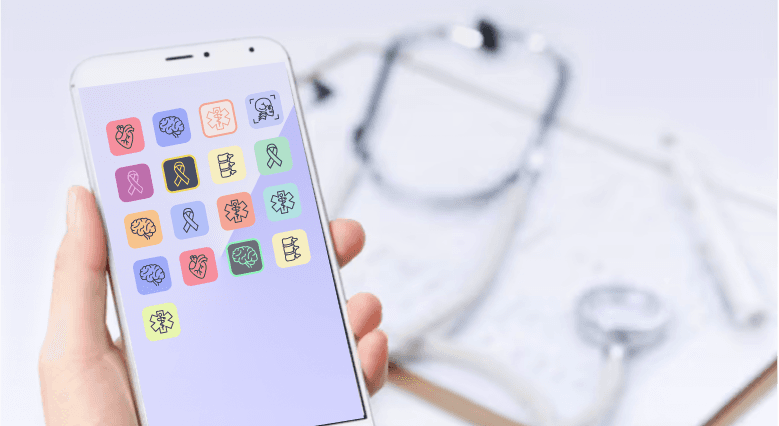
A few months ago, the Pediatric Moonshot team turned its attention to systematically mapping the major pediatric specialties and diseases. The result, five disease atlases covering:
104 cardiac diseases and defects
233 neurological conditions
104 pediatric cancers
176 kidney diseases
126 orthopedic conditions
We’re now ready to share any of these atlases with interested clinicians and researchers, and to publish updated versions annually as medical knowledge evolves.
These atlases now serve as a roadmap for disease-specific AI agents - one for each condition. Here’s how they work:
A detection agent queries the Patient Digital Twin with a structured set of clinical questions.
Affirmative answers build confidence that a patient has a given condition. A score above 90 generates a specific clinical rationale and therapy recommendations for the doctors querying it.
A score below 50 would instruct the agent to provide a negative answer and move on.
Scores between 50 and 90 require the next most informative and cost-effective diagnostic test to resolve the ambiguity.
While writing this update, we have 5 kidney disease-specific AI agents implemented and ready to test at three BevelCloud sites; and 25 more disease-precise AI Agents already designed and waiting to be prepared for deployment.
Way to go: we have to complete all 843 disease-precise detection agents in the atlases above to deploy the expertise of the world’s best oncologists, nephrologists, neurologists, and cardiologists directly to the point of care - across America and beyond - right next to any Patient Digital Twin already deployed and running.
Pediatric Moonshot Podcast Series
Our non-profit, pediatricmoonshot.org, continues to serve as a vehicle to draw more attention to the challenges in children’s healthcare. We just published the 45th podcast, with our most recent guests including Ronald Cohn, CEO at Sick Kids (the #1 children’s hospital in the world); Jamie Wiggins, COO at Arkansas Children’s; Susanna Greer, Chief Science Officer at the V Foundation; Kirstie Keller, CEO at Additional Ventures; and Kathleen Ruddy at St. Baldrick’s Foundation.
Fundraising
Pediatric medicine attracts far less commercial investment than general healthcare, and AI is no exception. That gap is exactly why PediatricMoonshot.org has launched a formal donation campaign through its 501(c)(3), with three giving tiers:
Foundation Circle for donations of $250,000 and above.
Mission Circle for $10,000+.
Impact Circle with $100+.
We’re unveiling a new website in July to make it easier to follow and support the mission in just a few clicks.
Ahead of the launch, we’ve created an Impact Circle campaign on Zeffy.com. We invite our followers to become part of the first 100 Impact Makers supporting Pediatric Moonshot - who will get a special mention for helping us make history.
Support Pediatric Moonshot on Zeffy
Stay tuned - and reach out directly by replying to this email if you want your digital copy of our Atlas!