The
Challenge

For too many children, the right specialist is out of reach. That distance can be the difference between a child who gets better and one who doesn't.

FAMILY STORY

Mateo's story

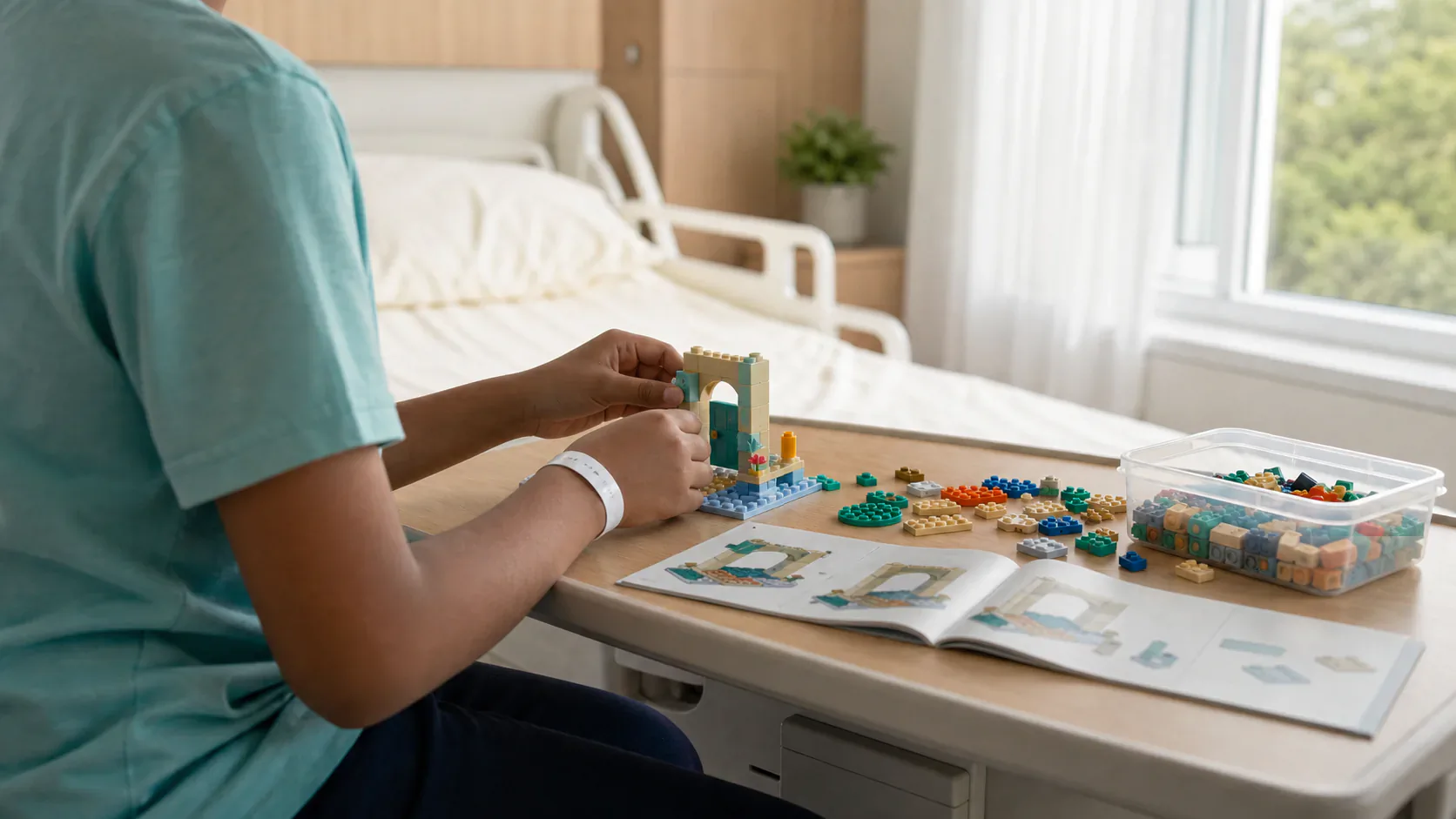
Mateo was 12 when the seizures started. Every day. His doctors ran tests. His family tried medications and chased every next step. Each answer led to another question. What nobody recognized for years was Focal Cortical Dysplasia — a condition that can be invisible on a standard MRI without the right expertise.


For Mateo, the wait was years. It didn't have to be.

The journey to the right answer takes too long. It costs too much. And no family should have to carry it alone.

"As Division Chief, I faced the challenge of reducing long waitlists for developmental evaluations. We had over 1,000 kids waiting sometimes a year to see a specialist."

Dr. Sharief Taraman

then-Division Chief of Pediatric Neurology, Children’s Hospital of Orange County
Three structural problems

Three structural problems

Rare condition complexity

There are 617 known pediatric diseases and defects, and that number keeps growing. As medical science advances, conditions once lumped together are being identified as distinct diseases, each requiring its own depth of specialist knowledge.


No general doctor can keep pace with all of it. And for the child in the room, that gap is everything.

70%

of rare diseases begin in childhood

— Source: Journal of Managed Care & Specialty Pharmacy, 2025

Specialist scarcity

There is roughly one pediatric nephrologist for every 230 children living with kidney disease. The US is an estimated 20% below national need for child neurologists. In cardiology, the fastest- growing regions have the slowest-growing specialist supply.


The gap is widening.

50%

of pediatric subspecialty positions go unfilled

— Source: 2025 NRMP data via Medscape

Uneven access

For some families, the nearest specialist is hours away. For others, it's a referral across state lines, a months-long wait, a record that doesn't follow the child from one hospital to the next.


In some parts of the country, the question isn't how far the specialist is.

There isn't one.

59%

of children live 80+ miles from a specialist

— Turner et al., JAMA Pediatrics, 2025)

The Path to
Answers

Symptoms begin

Something is wrong. It may be subtle — fatigue, a change in behavior, something a parent notices before any test would catch it. The family brings the child to a doctor.

Initial explanations

Doctors start with the most likely explanation — that's how medicine should work. For a rare or complex condition, though, that's usually not the case. The family keeps waiting for answers standard testing can't provide.

Referrals & Waiting

A specialist is needed. The nearest one may be hours away. The first available appointment may be weeks or months out. The family waits. The child's condition does not.

Treatment uncertainty

Records move between institutions — slowly, incompletely, sometimes not at all. Each new doctor starts closer to the beginning. The family tells the story again.

Specialist insight arrives

The right expertise finally reaches the child. Sometimes it changes everything. Sometimes it comes too late.

WHY EARLIER EXPERTISE CHANGES WHAT IS POSSIBLE

When the right expertise reaches a child sooner, the outcome will almost always be better.

Earlier expertise does more than shorten the journey. It changes what treatment is possible, what damage is avoidable, and how much of a child’s life is spent waiting for answers rather than living it.

bridging the gap

This is a solvable

problem.

The expertise exists. AI makes it possible to move that expertise to the children who need it — across institutions and borders, at any scale.

That is why Pediatric Moonshot exists.

Follow the Moonshot

First peek at what's next, straight to your inbox.

The AI supercomputer for children's medicine.

Get Involved

© 2026 Pediatric Moonshot. All rights reserved.

Follow the Moonshot

First peek at what's next, straight to your inbox.

The AI supercomputer for children's medicine.

Get Involved

© 2026 Pediatric Moonshot. All rights reserved.

Follow the Moonshot

First peek at what's next, straight to your inbox.

The AI supercomputer for children's medicine.

Get Involved

© 2026 Pediatric Moonshot. All rights reserved.